
Begins Walking Alone (10-13 Months)
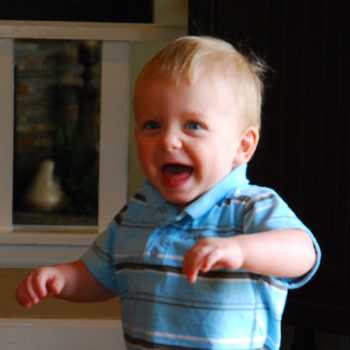
At first, a baby may walk with his feet wide apart to help with balance. As he becomes more confident, he will learn to stop, change direction, squat to pick something up, and stand again. References Shelov, S. P. (Editor-in-Chief). (2004.) Caring for Your Baby and Young Child: Birth to Age 5. The American Association […]
Stands Alone Easily (10-12 Months)
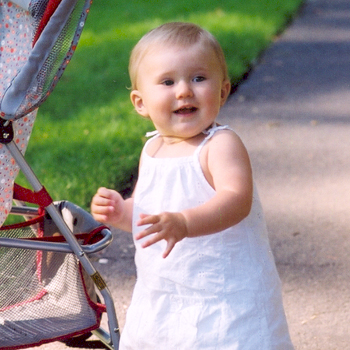
Babies will learn to stand momentarily without support until they have enough confidence to stand for longer periods and eventually take a step or two. References Shelov, S. P. (Editor-in-Chief). (2004.) Caring for Your Baby and Young Child: Birth to Age 5. The American Association of Pediatrics. Revised edition. New York: Bantam Books.
Walks Holding onto Furniture (9-11 Months)
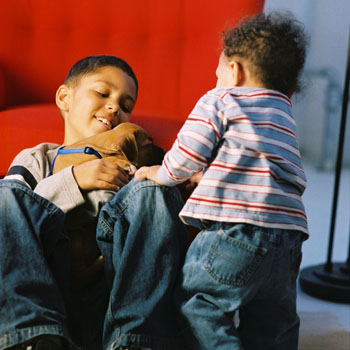
Although crawling gives babies a new perspective on the world around them, they observe people walking and strive to do the same. In preparation for this important milestone, babies begin pulling themselves up to a standing position. Once they feel secure standing, they start taking tentative steps while holding onto furniture. As their balance improves, they will […]
Capable of Poking with Index Finger (8-13 Months)
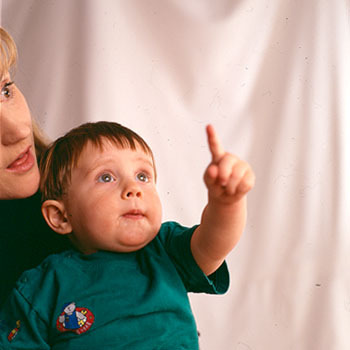
Most babies around 12 months use their improved coordination to thoroughly investigate the objects they encounter, picking them up, banging them on the floor, shaking them, and passing them from one hand to the other. Now capable of poking with the index finger, they explore holes by poking them. Babies don’t know where it’s safe […]
Places Objects Into and Out of Containers (8-12 Months)
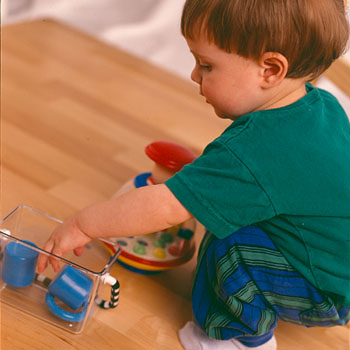
As they approach 12 months, babies use their improved coordination to thoroughly investigate the objects they encounter, picking them up, banging them on the floor, shaking them, and passing them from one hand to the other. They demonstrate their growing hand and finger skills by placing objects into containers and taking them out again. This is […]
Uses Pincer Grasp (8-11 Months)
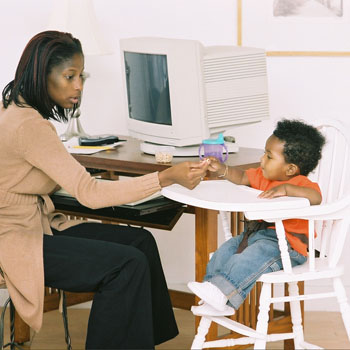
At 8 months, most babies have not acquired the hand and finger skills to use the pincer grasp, instead clumsily “raking” desirable objects toward themselves. As they approach 12 months, they gain the skills to grasp objects of different sizes with the thumb and first or second finger. They practice this pincer movement on any and all […]
Lets Objects Go Voluntarily (8-11 Months)
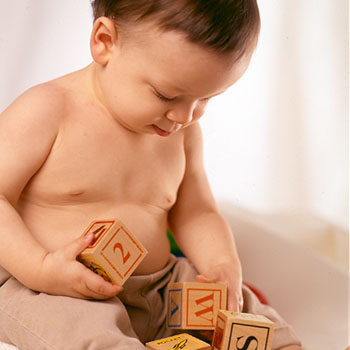
As babies gain the skills to open and close their fingers, they often delight in dropping and throwing small objects. They might fling toys out of their playpens or off their highchairs, repeating the process over and over again for family and friends. References Shelov, S. P. (Editor-in-Chief). (2004.) Caring for Your Baby and Young Child: […]
Crawls Forward on Belly (8-10 Months)

Between 8 and 12 months of age, babies are in constant motion. They arch their necks to investigate their surroundings when lying on their stomachs and grab their feet when lying on their backs. All this activity strengthens muscles and prepares babies for crawling, a skill usually mastered between 7 and 10 months of age. While […]
Can Sit Alone (7-10 Months)
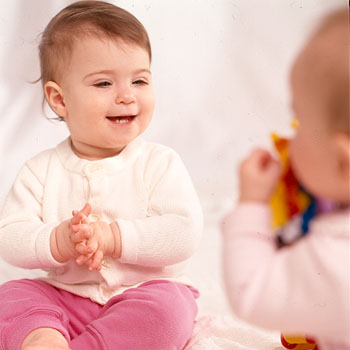
At this age, most babies are stable and can sit for longer periods of time. This is a major achievement, as it allows them to practice other skills like reaching, grabbing, and moving objects from hand to hand from an easier position. They have a new view of the world and new ways to interact […]
Physical: Overview (6-12 Months)
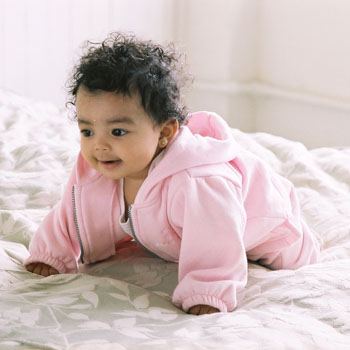
Between 6 and 12 months, babies reach many important milestones. Most can sit without support and eventually become mobile, from rolling over and creeping on the floor to crawling and cruising and possibly walking. Vision and hearing also improve during this time. By the seventh month, most children have full-color vision, and they can see […]