Capable of Some Deception (28-37 Months)

When children develop the ability to deceive others is controversial, and some researchers believe that “lying” does not truly emerge until children are 4 or 5 years old. At this age, children don’t understand the difference between “truth” and “lying” and can have a hard time distinguishing between stories and reality. Several experiments have shown […]
Can Make Mechanical Kinds of Toys “Work” (28-36 Months)
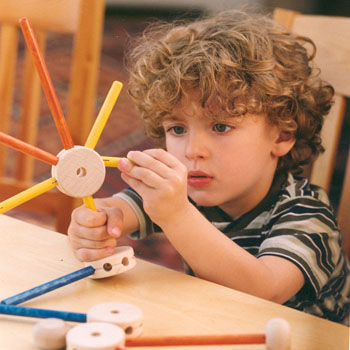
The learning process becomes more thoughtful for toddlers as they approach their third birthday. They begin solving problems and performing mental trial-and-error instead of manipulating objects physically. As their understanding of cause and effect deepens, toddlers become more interested in mechanical toys and turning lights and appliances on and off. References: Shelov, S. P. (Editor-in-Chief). (2004). Caring […]
Capable of Completing Puzzles with Three or Four Pieces (26-36 Months)
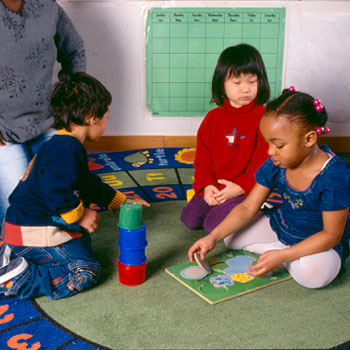
By the end of their second year, toddlers begin to understand the relationship between objects, solve simple jigsaw puzzles, and match similar shapes. References: Shelov, S. P. (Editor-in-Chief). (2004). Caring for Your Baby and Young Child: Birth to Age 5. The American Association of Pediatrics. Revised edition. New York: Bantam Books.
Develops an Understanding of Other People’s Intentions and Goals (25-36 Months)

The beginning of understanding other people’s minds is gradual; at 9 months, an infant may exhibit “joint attention,” the ability to look where another person is looking to see what the other person sees. Other skills, like understanding intentions, may be present as early as 18 months of age. However, two- to three-year-olds still live […]
I Know This Word
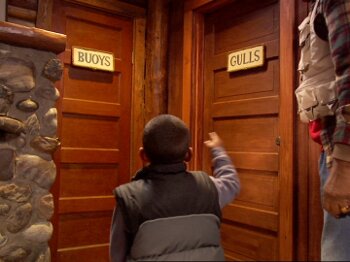
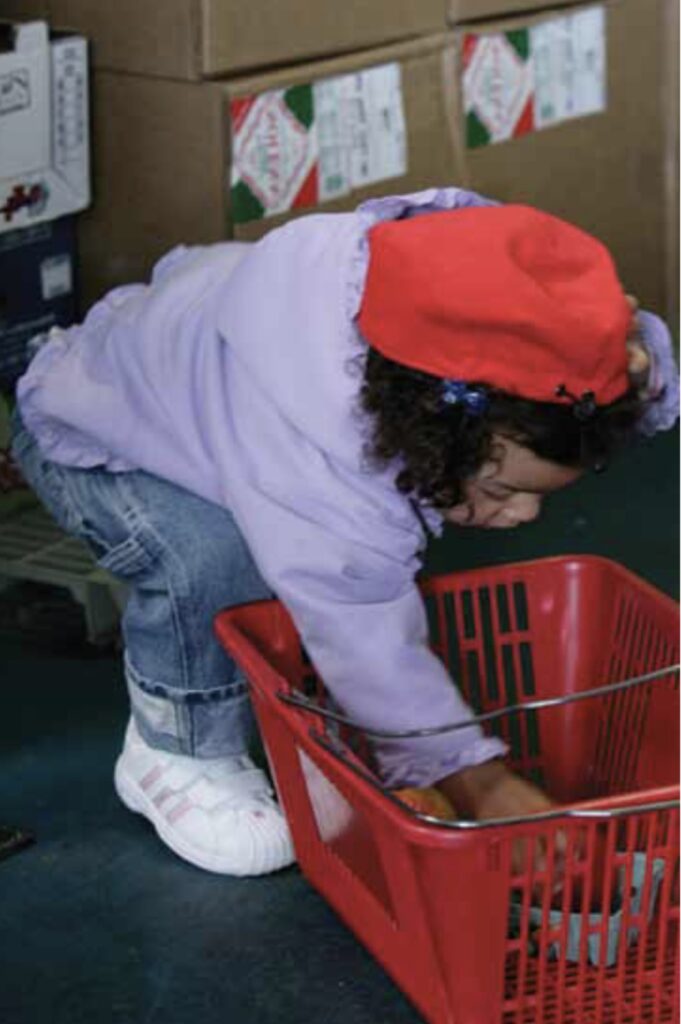
Words are all around us! Just one more stop before you head home. So into the store, you go. You’re shopping, and your daughter says, “That says oranges!” You are surprised and happy as you think your child reads the sign. Or is she? Not exactly. At a young age, with your help, children begin […]
Pretend Play Includes Symbolic Use of Objects (24-36 Months)
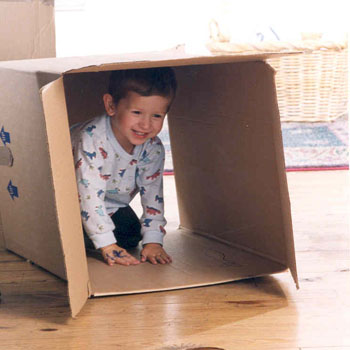
Pretend play includes the symbolic use of objects. Once an object has been given an “identity” (for example, a block is a cell phone), children keep that object’s identity the same until they are finished with that particular game. Children at play work from cognitive models that link situations and emotions, and by age 2 […]
Cognitive and Learning: Overview (2-3 Years)
Between two and three, children become better problem solvers. They can make mechanical toys “work” and can put together puzzles with just a few pieces. They are tireless explorers of their world. The biggest challenge for children this age comes when they don’t have the physical skills to make their big ideas work out. Learning […]