
Capable of Responding to “No” (5-7 Months)

Although children don’t yet understand what words mean, they may stop doing something when a parent or caregiver says “no.” Even if they stop, this does not mean that they understand that something they are doing is wrong or that they have learned that certain behavior is unacceptable. They might try the same thing again […]
Can Verbalize Happiness and Displeasure (4-7 Months)
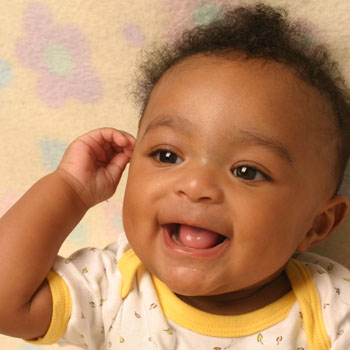
Babies begin voicing their emotions and desires frequently at 5 or 6 months, laughing to show pleasure and crying when they want a different toy or a change in activity. Babies are learning to communicate about things other than their immediate needs. References: Shelov, S. P. (Editor-in-Chief). (2004). Caring for Your Baby and Young Child: […]
Attempts to Respond to Sounds by Making Sounds (4-7 Months)

By 4 months, many babies begin listening for the individual sounds in words, noticing how vowels and consonants combine into syllables, words, and sentences. Their babbling might sound like gibberish, but these early attempts at language begin to incorporate the rhythms and characteristics of their native languages. Babies’ responses to sounds also serve as experiments […]
Capable of Responding to Own Name (4-5 Months)
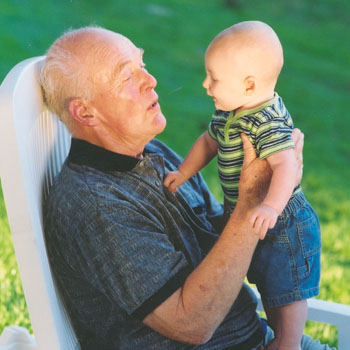
A baby’s name is generally used much more often than other words. Studies show that babies are early as 4 months old prefer the sound of their individual name to that of other names. This does not mean that they understand that this is their name; rather, they are simply able to recognize the sounds […]
Language and Communication: Overview (6-12 Months)
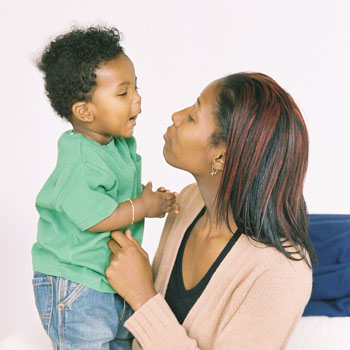
Between 6 and 12 months, babies are actively processing the language sounds they hear. They are learning to take “turns” when communicating, and their babbling becomes more advanced as it sounds more like the language in their homes. These children are beginning to communicate using gestures and sounds, and by the end of their first […]
Careful, Frank: Communicating through Emotional Expressions (2-24 Months)
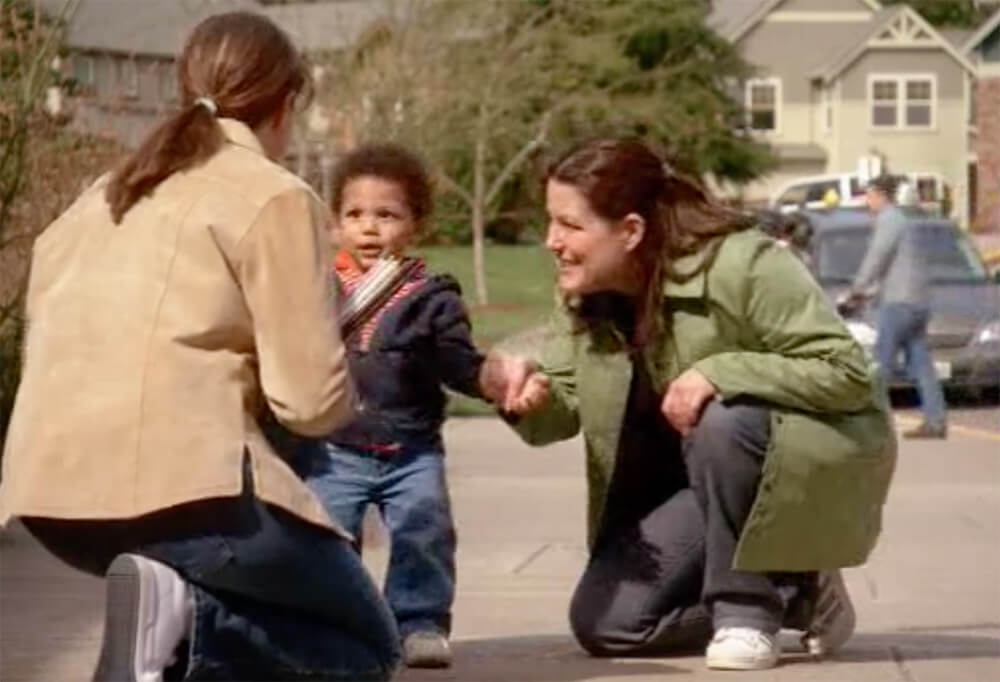
As adults, we do this all the time to obtain feedback from the world around us, but it’s fascinating to learn how early this skill develops. In fact, by watching adults’ facial expressions and listening to their tone of voice, babies as young as 10 months old can use emotional information to decide what to […]