Capable of Spontaneous “Ooh” Sound (0-4 Months)

In their first months, infants start making sounds other than crying. Cooing sounds often occur when a baby is quiet, awake, and content. At first, the cooing sounds don’t seem directed toward adults and are probably an early form of vocal practice. References: Kaye, K. (1982). The mental and social life of babies. London: Harvester […]
Can Discriminate Mother’s Voice from Other Women’s Voices and Prefers Her Voice to Other Women’s Voices (0-4 Months)
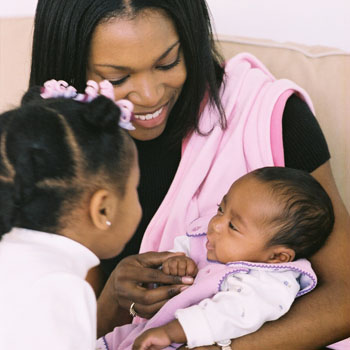
At birth, infants can respond to human voices. They are also capable of distinguishing among the voices of different people, and they begin to show a preference for the mother’s voice soon after birth. In one experiment, infants were given a pacifier that could record how often they sucked when they were awake. Then the […]
Can Discriminate between Syllables within Words (0-4 Months)

Within the first few days after birth, infants are sensitive to the stress patterns or rhythms of the words they hear. For example, infants can distinguish between a two-syllable word that begins with a stressed sound (like “FA-ther”) and a word that ends with a stressed sound (“to-DAY”). Researchers have found that babies pay attention […]
Prefers Sounds of Familiar Language to Those of Other Languages (0-3 Months)
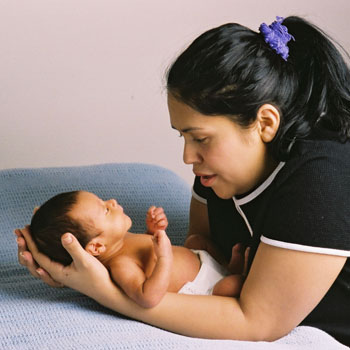
At birth, infants can respond to human voices. They are also capable of distinguishing between the sounds of different languages, and they begin to show a preference for the language spoken by their mothers soon after birth. In one experiment, infants of English-speaking mothers and infants of Spanish-speaking mothers were given a pacifier that could […]
Talking to Baby (0-12 Months)
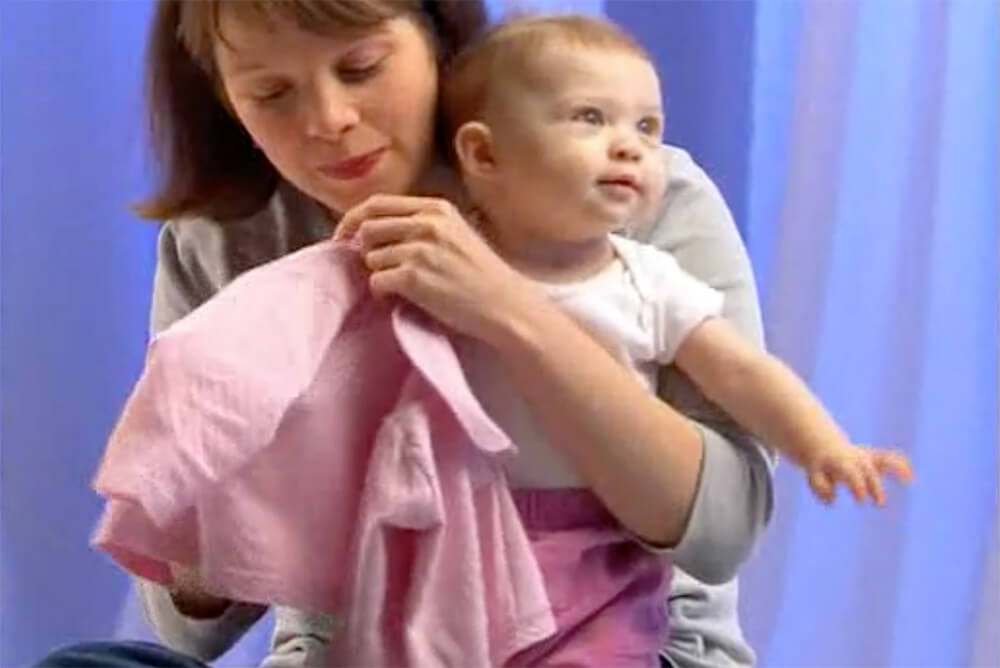
How do you talk to your baby? Would you say, “hellooooo, sweeeeetie! How’s my baaabeee? Such a pretty baaabeee.” Does your voice go higher than normal? Do you repeat words? You wouldn’t talk to an adult this way or even a school-aged child. But talking to a baby is different. Slowing down your words and […]
Parentese: Why It’s Never Too Early to Start a Conversation (0-6 Months)
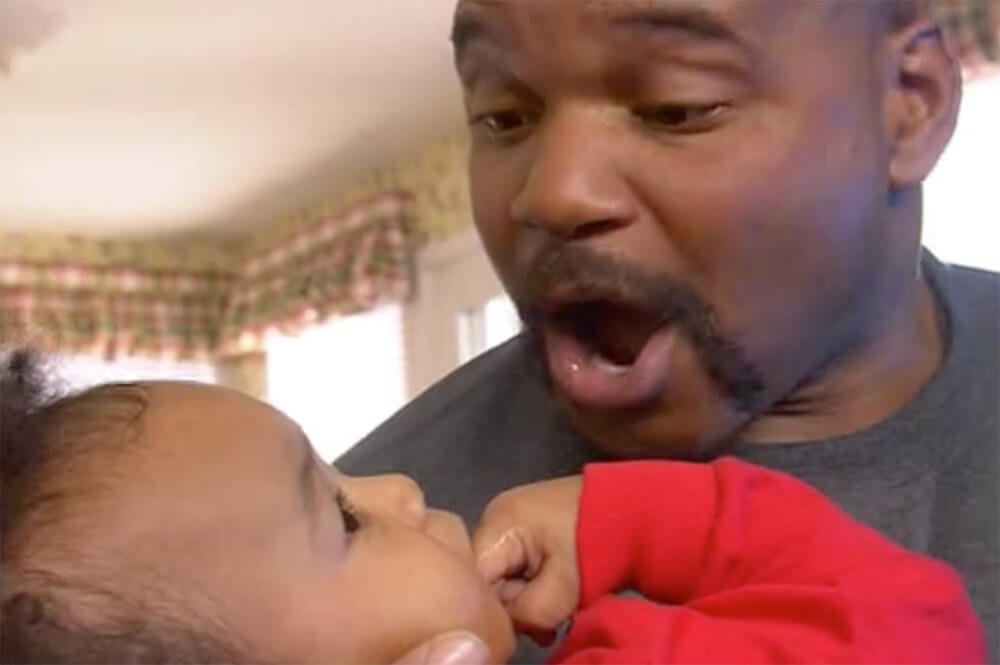
Researchers call the special way we talk to babies “motherese” or “parentese.” This sing-song speech, often accompanied by exaggerated facial expressions, seems to be used by nearly everyone who talks to a baby. We all love to do it–mothers, fathers, grandparents, friends, and even preschoolers addressing younger brothers and sisters. And what’s more, babies seem […]
Getting In Tune with Baby
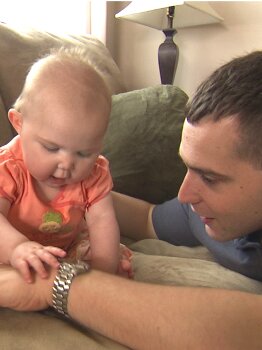
How do I know what my baby wants? Everyone knows that babies cry when they are upset. They smile when they’re happy. And their eyes get wide and bright when they’re interested in something. But what else can babies tell us, even though they can’t talk yet? When we pay close attention, babies can tell […]
Language and Communication: Overview (0-6 Months)
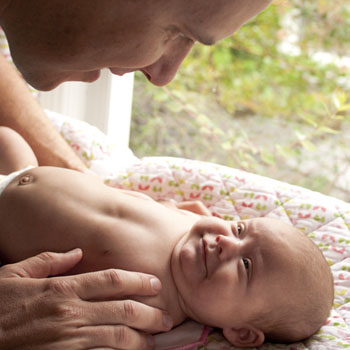
People are born to talk to each other, and nowhere is this more apparent than in a developing child. Babies start out preferring to hear human voices, learn quickly to respond to their names, and even begin imitating spoken sounds by the end of the first month.