Speaks in Complex Sentences (51-59 Months)
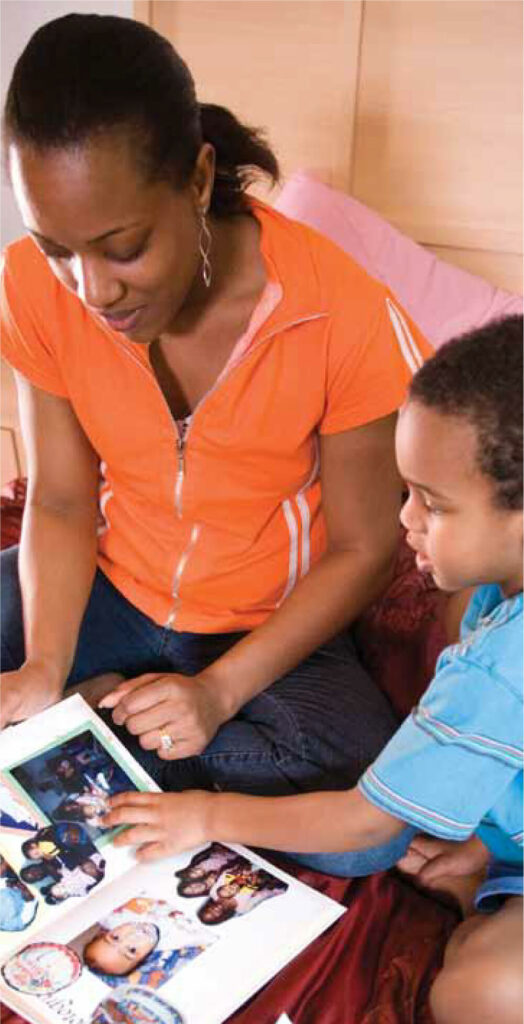
Language skills blossom around age 4, and preschoolers can now pronounce most sounds of the English language. Their vocabularies expand to approximately 1,500 words, and they will gain another 1,000 before their fifth birthday. They are able to tell elaborate stories that consist of more complex sentences with up to eight words. References: Shelov, S. P. (Editor-in-Chief). […]
Capable of Speaking in Sentences of Five to Six Words (40-48 Months)
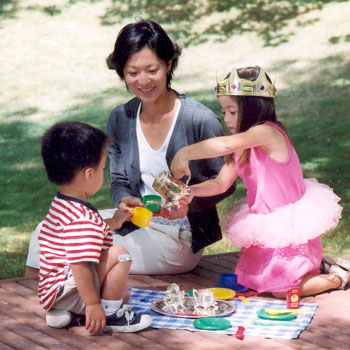
At age 3, most children have active vocabularies of 300 or more words, talk in sentences of five or six words, and imitate most adult speech sounds. Children this age tend to chatter constantly, practicing and perfecting their new skills. References: Shelov, S. P. (Editor-in-Chief). (2004). Caring for Your Baby and Young Child: Birth to […]
Understands the Concept of “Same” and “Different” (39-48 Months)

During their fourth year, children begin to compare things in terms of similarities and differences. This is an important analytical skill that leads to classifying and other reasoning abilities. References: Shelov, S. P. (Editor-in-Chief). (2004). Caring for Your Baby and Young Child: Birth to Age 5. The American Association of Pediatrics. Revised edition. New York: […]
Inserts Articles, Auxiliary Verbs, and Grammar Not Previously Seen (37-44 Months)

In the third year, children use language in increasingly sophisticated ways. This includes making sentences that use articles (“a” or “the”), auxiliary verbs (“can,” “may,” or “do”), and other grammatical forms (adding “-ed” to talk in the past tense or “-ing” to describe the present progressive, as in “I am eating”). References: Hoff-Ginsberg, E. (1997). […]
Can Ask a Grammatically Correct Question (35-41 Months)
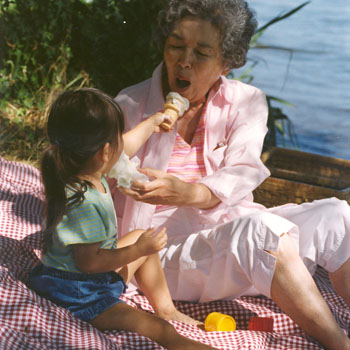
Before age 3, children’s questions are generally incomplete, depending on words like “where” or “what” and a rising tone at the end of the sentence. Around age 3, children begin to use more complete constructions. For example, a younger child might ask, “Where doggy?” while an older child may ask, “Where did doggy go?” or […]
Language and Communication: Overview (3-5 Years)
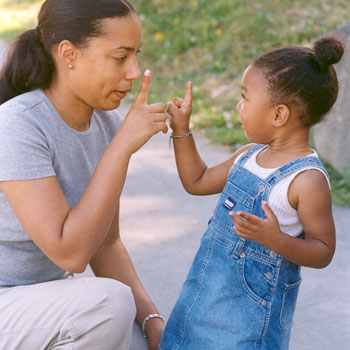
It’s storytime! By age 5, most children can communicate effectively, and many enjoy telling creative stories. Their sentences get longer and more complex, and children begin to use correct grammar (but not always!) Most can also use the future tense when talking about upcoming events.